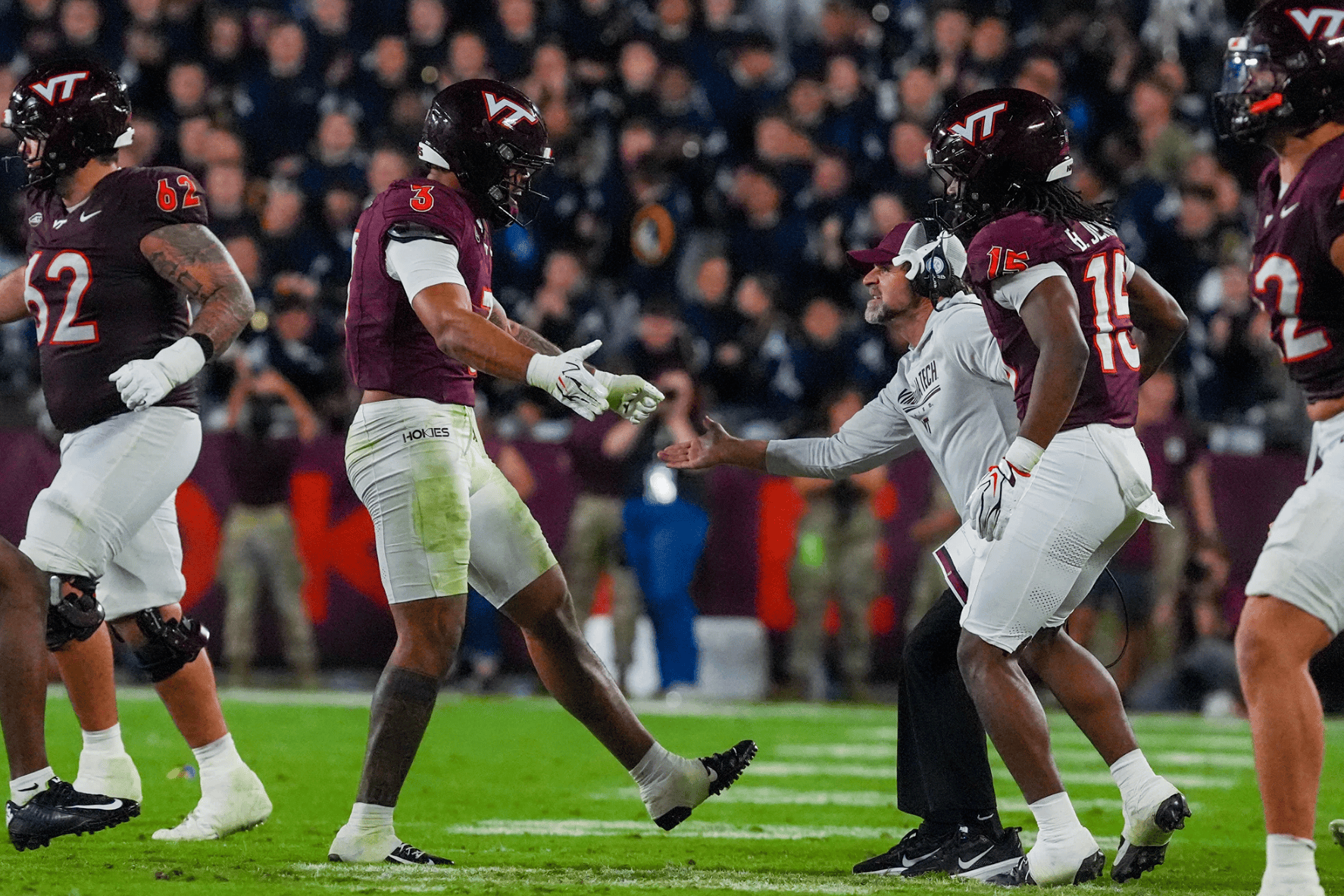
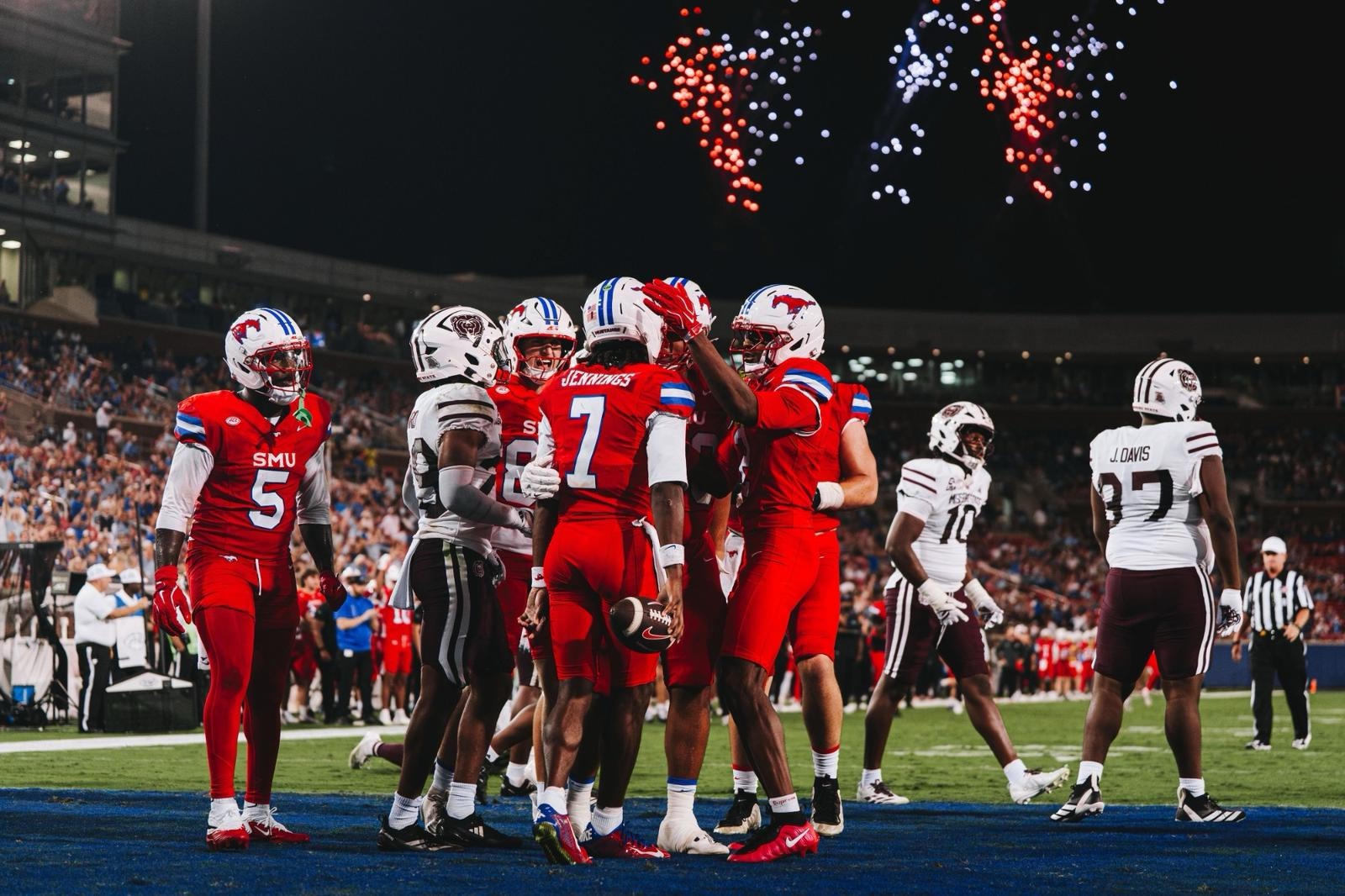
Virginia Tech vs. SMU Preview: Friday Night Lights in Dallas

The Big Picture

What a difference two weeks can make.

The last time we saw Virginia Tech, the Hokies were celebrating a 20-16 victory over Clemson in Death Valley. It wasn’t always pretty, the offense struggled to establish a running game, and there were plenty of moments where it looked like another frustrating close loss was coming. But when it mattered most, James Franklin’s team found a way to win. That’s something we haven’t been able to say nearly enough about Virginia Tech football over the last decade.

Now the Hokies are 6-2, bowl eligible before November, and still playing meaningful football in the ACC race. Considering where this program has been, that’s a pretty good place to be eight games into the Franklin era. But nobody should be satisfied yet.

Virginia Tech heads to Dallas on Friday night for what might be its toughest remaining road test. SMU is also 6-2, has one of the most explosive offenses in the ACC, and is looking to rebound from a disappointing 30-27 loss at Syracuse.

The Mustangs are nearly a touchdown favorite, and for good reason. They’re extremely dangerous offensively, they’ve been excellent at home, and they present some serious matchup problems for Virginia Tech’s secondary.

But the Hokies have a few things working in their favor, too. They’re coming off a bye week, they’re getting healthier along the offensive line, and their defense has developed into one of the most disruptive units in the conference. There’s also the matter of momentum. Virginia Tech has won two straight, including arguably its biggest road victory in years. SMU just watched Syracuse score the winning touchdown with 17 seconds remaining.

Both teams are still alive in the ACC race, but a third conference loss would make the road to Charlotte significantly more difficult. Friday night is an opportunity for Virginia Tech to prove that the Clemson victory wasn’t just a great moment. It was a sign of things to come.

A Look at SMU

Rhett Lashlee has done a tremendous job turning SMU into a legitimate ACC contender.

When the Mustangs joined the conference in 2024, plenty of people questioned whether a former American Athletic Conference program could immediately compete with the league’s established powers.

Those questions disappeared pretty quickly. SMU reached the College Football Playoff in its first ACC season, and Lashlee has continued building a program capable of competing near the top of the conference.

This year’s team enters Friday at 6-2 overall and 4-2 in ACC play. The Mustangs had won four consecutive games before their loss to Syracuse, including an impressive 59-20 demolition of California. Yes, the same California team that beat Virginia Tech 25-20. College football’s transitive property is undefeated until it isn’t.

The Mustangs have a dynamic offense led by quarterback Kevin Jennings, an experienced offensive line, and enough skill-position talent to create problems for just about anybody. Defensively, they’re solid across the board and particularly effective at getting opponents off the field on third down. However, SMU isn’t without weaknesses. The Mustangs have struggled with turnovers, penalties, and finishing defensive possessions in the red zone.

Those weaknesses give Virginia Tech a legitimate opportunity to pull off the upset.

By the Numbers

Season averages through games played October 31, 2026.

StatisticVirginia TechSMU
Points per game35.035.3
Total offense424.1467.3
Passing offense284.4320.4
Rushing offense139.8146.9
Points allowed20.522.3
Total defense311.4307.6
Passing yards allowed218.0181.8
Rushing yards allowed93.4125.9

The numbers suggest two pretty evenly matched teams.

SMU has the advantage offensively, particularly through the air, while Virginia Tech has been slightly better at keeping opponents off the scoreboard and significantly better against the run.

The biggest statistical mismatch is SMU’s passing attack against Virginia Tech’s pass defense. The biggest opportunity for the Hokies is their defensive front against an SMU offense that can become vulnerable when forced into obvious passing situations. That battle could decide the game.

When Virginia Tech Has the Ball

The good news for Virginia Tech is that Ethan Grunkemeyer has been significantly better than most people probably expected entering the season. Through eight games, the Penn State transfer has completed 71.4% of his passes for 2,140 yards, 17 touchdowns, and just two interceptions. He’s also added five rushing touchdowns. Those are impressive numbers for a quarterback in his first season running a new offense.

Grunkemeyer hasn’t been perfect, but he’s been efficient, he’s protected the football, and he’s shown an ability to deliver in important situations. Against Clemson, he wasn’t particularly spectacular statistically, throwing for just 156 yards. But he made the throws he needed to make, including the fourth-down touchdown to Luke Reynolds that ultimately won the game.

That’s the kind of quarterback play Virginia Tech has been missing. The problem is that the Hokies haven’t been able to consistently complement their passing game with an effective rushing attack. Jeffrey Overton Jr. has rushed for 639 yards this season, but Virginia Tech is averaging just 139.8 rushing yards per game, ranking 95th nationally. Against Clemson, Overton managed only 26 yards on 10 carries. That’s not going to get it done against SMU.

The Mustangs have one of the better third-down defenses in the country, allowing opponents to convert just 27% of the time. They also have 22 sacks and an experienced defensive front that can create problems with pressure packages and disguised blitzes.

Fortunately, Virginia Tech should be getting some help. James Franklin indicated Monday that offensive linemen Montavious Cunningham and Brody Meadows are expected back following the bye week. Justin Terry, however, remains unavailable. Those returns couldn’t come at a better time.

If Virginia Tech can establish even a moderately effective rushing attack, it should open opportunities for Grunkemeyer and his receivers. Que’Sean Brown leads the team with 685 receiving yards, while tight end Luke Reynolds has become one of the most dependable targets in the ACC, recording 50 catches for 493 yards and six touchdowns. Both will need to have productive nights.

SMU is allowing just 181.8 passing yards per game, so this won’t be an easy matchup. But the Mustangs have also allowed opponents to score on 90% of their red-zone trips. Virginia Tech needs to take advantage of those opportunities. Field goals aren’t going to beat SMU.

When SMU Has the Ball

This is where things get interesting. Kevin Jennings might be the best quarterback Virginia Tech has faced this season.

The fifth-year SMU quarterback has thrown for more than 2,400 yards and 21 touchdowns while completing nearly 74% of his passes. He’s mobile, experienced, accurate, and capable of turning broken plays into explosive gains. In other words, he’s exactly the kind of quarterback who can give Virginia Tech’s defense problems.

Jennings is coming off a 351-yard performance against Syracuse in which he completed 29 of 36 passes. Despite those numbers, SMU still lost 30-27. That’s encouraging for Virginia Tech. The Mustangs also have a talented running back in Kendrick Raphael, who has rushed for 697 yards and nine touchdowns, while receivers Yamir Knight and Yannick Smith provide dangerous options downfield.

SMU averages 467.3 yards and 35.3 points per game.

This offense is legitimate. But so is Virginia Tech’s defensive front. The Hokies lead the ACC with 27 sacks and 11 forced fumbles. They’re allowing just 93.4 rushing yards per game, good for 12th nationally. That’s a pretty impressive turnaround for a unit that struggled with consistency earlier in the season.

Kemari Copeland, Mylachi Williams, and Aycen Stevens have helped establish a physical identity up front, while Jaquez White has emerged as a difference-maker in the secondary. White was outstanding against Clemson, finishing with 11 tackles and a critical late sack.

The challenge this week will be substantially different. Clemson struggled to consistently threaten Virginia Tech through the air. SMU won’t have that problem. The Mustangs average more than 320 passing yards per game, and Virginia Tech’s secondary has been vulnerable to explosive plays.

The Hokies can’t expect to sit back in coverage and hope Jennings makes mistakes. They need to pressure him. Syracuse sacked Jennings four times last weekend after SMU had surrendered only eight sacks through its first seven games. If Virginia Tech can create similar pressure, the Hokies have a chance to disrupt the Mustangs’ offensive rhythm.

If Jennings has time to sit in the pocket, it could be a long night.

Three Keys to the Game

1. Get Pressure on Kevin Jennings

This is the most important matchup of the night. Virginia Tech’s defensive line has been one of the team’s biggest strengths, and the Hokies need another big performance. Jennings is too talented to allow him to operate comfortably.

The good news is that Virginia Tech doesn’t necessarily need to blitz to generate pressure. The Hokies have enough talent along the defensive front to create disruption with four rushers. That will be important because sending additional defenders after Jennings could leave an already vulnerable secondary exposed.

The goal should be to force Jennings into quick decisions, limit explosive plays, and make SMU put together long, sustained drives. SMU has also struggled with turnovers this season, entering the game with a minus-five turnover margin. Virginia Tech needs to capitalize on that weakness.

2. Establish Something Resembling a Running Game

I’m not asking Virginia Tech to suddenly become the 1999 Hokies. But 26 rushing yards from your starting running back isn’t going to cut it. The Hokies need to find a way to create manageable second- and third-down situations. SMU’s defense is too good on third down to consistently put Grunkemeyer in obvious passing situations.

The returns of Cunningham and Meadows should help, but Virginia Tech still needs better execution up front. A productive running game would also help keep Jennings and the SMU offense on the sideline. Virginia Tech averages more than 32 minutes of possession per game, compared to SMU’s 29:24.

That’s an advantage worth maintaining.

3. Win the Turnover Battle

This might be the simplest key of them all. SMU has been careless with the football at times this season, while Virginia Tech has generally done a good job protecting it offensively.

Grunkemeyer has thrown just two interceptions in eight games.

Jennings has thrown five.

The Hokies have also forced 11 fumbles, although forcing fumbles and recovering them are two very different things. Virginia Tech needs to turn its defensive disruption into actual takeaways. In a game where both offenses are capable of scoring 30-plus points, one additional possession could be the difference between winning and losing.

Players to Watch

Ethan Grunkemeyer — Virginia Tech QB

The Hokies don’t need Grunkemeyer to throw for 400 yards. They need him to continue making smart decisions, protecting the football, and delivering in critical situations. His ability to handle SMU’s pressure packages will be a major factor.

Kevin Jennings — SMU QB

Jennings is the engine that makes the Mustangs go. He’s accurate, mobile, and dangerous downfield. Virginia Tech’s defense needs to make him uncomfortable early and often.

Luke Reynolds — Virginia Tech TE

Reynolds has become Grunkemeyer’s security blanket, especially in critical situations. His size and physicality should create opportunities against SMU’s defense, particularly in the red zone.

Kendrick Raphael — SMU RB

Raphael has been extremely productive this season, averaging more than five yards per carry. Virginia Tech needs to keep him contained and force SMU to become one-dimensional.

Betting Preview

The oddsmakers have SMU favored by 6.5 points, with an over/under of 55.5.

That seems reasonable.

SMU is undefeated at home this season, while Virginia Tech is coming off its biggest victory of the year and has had nearly two weeks to prepare.

The Mustangs have the more explosive offense, but Virginia Tech has the defensive front capable of making things difficult.

A few betting trends stand out.

Virginia Tech is 5-3 against the spread this season, while SMU is 3-4-1 according to the Associated Press. The Hokies also haven’t lost a game by more than five points.

Meanwhile, SMU’s turnover problems and tendency to commit penalties make the Mustangs difficult to trust as nearly a touchdown favorite.

There’s also a pretty significant rest advantage for Virginia Tech.

The Hokies haven’t played since October 24, while SMU played Syracuse on October 31.

I think that matters, particularly given Virginia Tech’s offensive line injuries.

My betting lean: Virginia Tech +6.5.

I wouldn’t be surprised if SMU wins this game, but I have a hard time believing there’s a full touchdown separating these teams.

As for the total, both offenses average approximately 35 points per game, but both defenses have also been fairly effective.

Virginia Tech’s ability to control possession could keep the scoring lower than expected.

My total lean: Under 55.5.

Neither is a particularly strong play, but I’d be more comfortable taking the points than laying them.

Prediction

This is a fascinating matchup.

Virginia Tech has a chance to take another major step forward in James Franklin’s first season, but the Hokies are going to have to play one of their best games of the year to leave Dallas with a victory.

SMU is extremely dangerous offensively, and Kevin Jennings presents a legitimate challenge for Virginia Tech’s secondary. I expect the Mustangs to have success moving the football, particularly through the air.

But I also think Virginia Tech’s defensive front is capable of creating enough negative plays to keep SMU from completely taking over the game.

Offensively, the Hokies should benefit from the return of two offensive linemen and an extra week of preparation. Grunkemeyer has been remarkably efficient this season, and I trust him to keep Virginia Tech competitive. The question is whether the Hokies can finish drives with touchdowns instead of field goals.

I think this game looks a lot like the Pittsburgh and California losses, with both teams trading punches and the outcome coming down to a handful of critical plays in the fourth quarter. The difference is that Virginia Tech has started finding ways to win those games. We saw it against Clemson. Let’s see if we see it again Friday night.

Prediction: SMU 30, Virginia Tech 27

Final Thoughts

There are still plenty of questions about Virginia Tech. The offensive line remains a work in progress. The running game has been inconsistent. The secondary has struggled with explosive passing plays. And the Hokies still haven’t put together four quarters of consistently good football against a quality opponent. But there’s also no denying the progress this program has made.

Virginia Tech is 6-2, has won two consecutive games, and is coming off its first victory at Clemson since 2007. The Hokies are playing meaningful football in November, and that’s something worth appreciating. A win over SMU would take things to another level.

It would give Virginia Tech seven victories with three regular-season games remaining, another quality road win, and a legitimate argument that the Hokies belong among the better teams in the ACC. More importantly, it would demonstrate that the Clemson victory wasn’t an isolated result. This team is learning how to win. Now it’s time to prove it again. Let’s go get another one. Go Hokies.
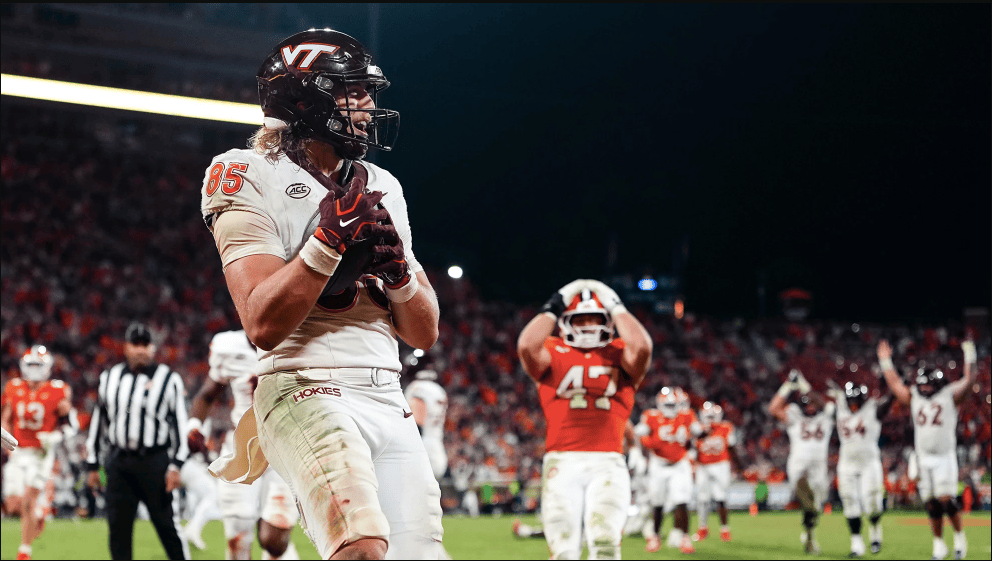
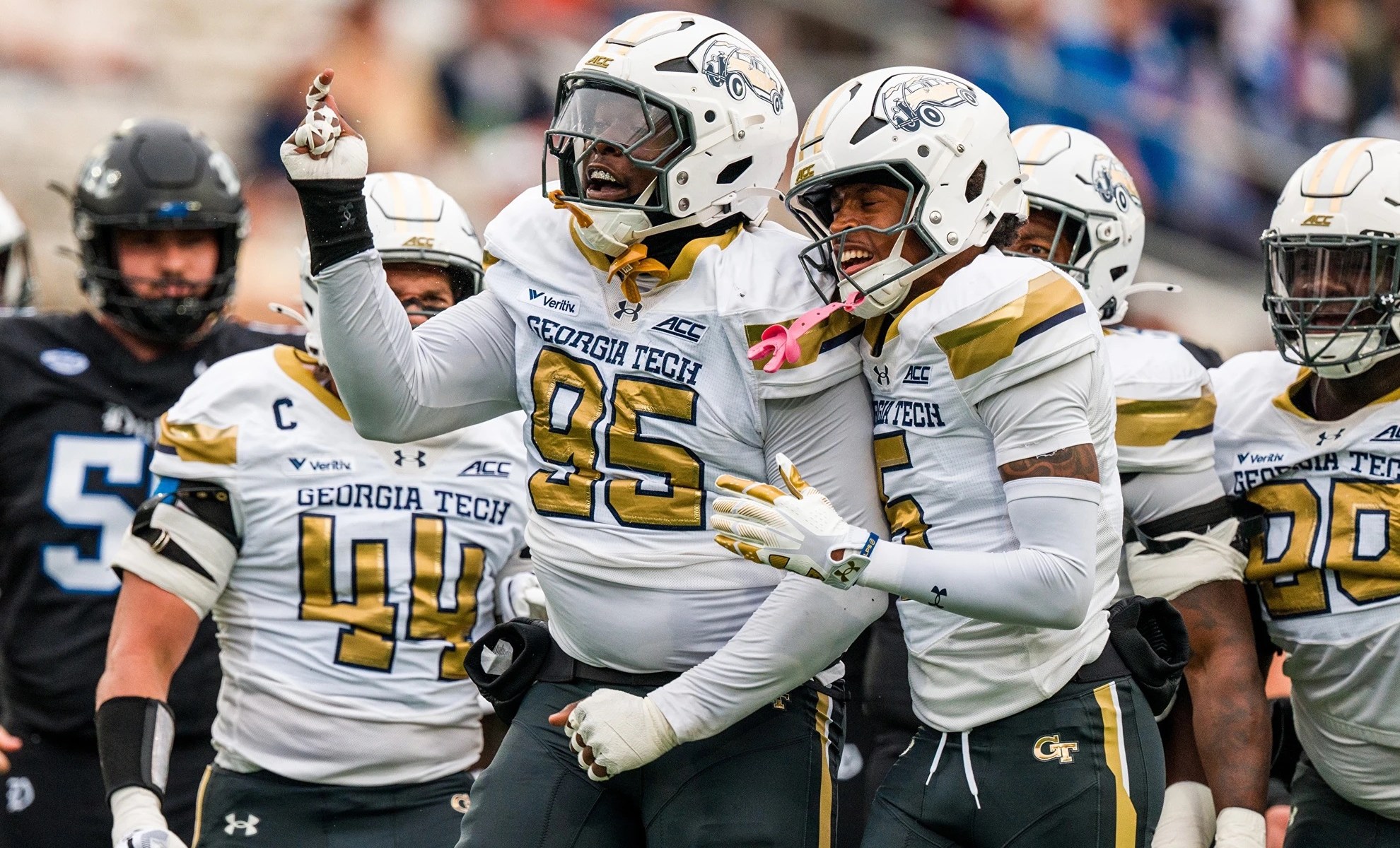
Bye Week Thoughts: Virginia Tech Is Ahead of Schedule, But How Good Are the Hokies?

Eight games into the James Franklin era, Virginia Tech is 6-2, bowl eligible, and coming off consecutive victories over Georgia Tech and Clemson. I’ll take it.

If you had told me before the season that Virginia Tech would enter its bye week with six wins, including a road victory at Clemson, I would have been pretty happy. Especially considering where this program was just a year ago.

But here’s the frustrating part. Virginia Tech is probably three or four plays away from being undefeated.

The Hokies lost to Pittsburgh 35-33 and California 25-20 in games they had opportunities to win. A couple of made field goals, a defensive stop, or better execution in the fourth quarter, and we’re potentially talking about an 8-0 football team.

Instead, we’re talking about a 6-2 team that has already exceeded many reasonable expectations but still hasn’t quite figured out how to consistently get out of its own way.

And that’s what makes the final four games so interesting. Virginia Tech has already accomplished the minimum expectation for Franklin’s first season. The Hokies are going bowling. They’ve demonstrated they can win on the road. They’ve beaten two recognizable ACC opponents in consecutive weeks.

Now the question becomes whether this team is simply better than what we’ve watched over the past several years or whether it’s actually capable of competing with the best teams in the conference. Those are two very different things.

1. James Franklin Has Already Changed the Expectations

Let’s start with the obvious. Virginia Tech looks like a competently coached football team again. That shouldn’t be a particularly high bar for a program with Virginia Tech’s resources and history, but here we are.

Franklin inherited a program that had spent the better part of a decade searching for an identity. Justin Fuente couldn’t sustain the early momentum. Brent Pry couldn’t turn recruiting optimism into consistent victories.

And now Franklin has Virginia Tech sitting at 6-2 with four games remaining. The most encouraging development isn’t necessarily the record. It’s that Virginia Tech has generally looked like the more prepared team when it takes the field.

There are actual offensive concepts. There’s a recognizable identity. The Hokies have enough talent to exploit opponents’ weaknesses instead of simply hoping the other team makes more mistakes. That’s progress.

But I’m not ready to declare the rebuild complete. Franklin’s teams have struggled coming out of halftime, and the two losses exposed some pretty significant problems with game management and execution.

The standard at Virginia Tech shouldn’t be simply reaching a bowl game. It should be competing for ACC championships.

Franklin wasn’t hired to turn a four-win team into a perennial seven-win team. He was hired to make Virginia Tech nationally relevant again. Six wins in eight games is an excellent start. It’s not the destination.

2. The Offense Is Better Than I Expected

One of my biggest concerns entering the season was how quickly Virginia Tech could develop an offensive identity with so many new pieces.

Eight games later, I’m pretty encouraged. Ethan Grunkemeyer has provided stability at quarterback, and the combination of his passing ability and the Hokies’ rushing attack has made this offense considerably more difficult to defend.

I also think Jeffrey Overton has been one of the more important pieces of the offensive turnaround. When Virginia Tech can establish the run, the entire offense opens up. Grunkemeyer doesn’t have to carry the team on every possession, the offensive line can play more aggressively, and opposing defenses have to respect multiple ways of moving the football.

The offense isn’t perfect. There are still stretches when the play-calling becomes predictable. The California game was particularly frustrating because Virginia Tech never seemed to establish a consistent rhythm.

And the Hokies have a tendency to make things unnecessarily difficult in the red zone. But compare this offense to what we’ve watched in Blacksburg over the past several seasons. It’s not particularly close.

The biggest question moving forward is whether the offense can maintain that production against better competition.

SMU and Miami are going to provide significantly more difficult tests than some of the teams Virginia Tech has already faced.

If the Hokies want to win either of those games, Grunkemeyer and the offense are going to have to play well for four quarters. Not two. Not three.

Four.

3. The Defense Still Makes Me Nervous

Virginia Tech’s defense has been one of the more frustrating parts of this season. There are stretches when the Hokies look perfectly capable of shutting down an opponent.

Then there are stretches when opposing quarterbacks seemingly complete every pass they attempt.

The secondary has been a particular concern. Pittsburgh scored 35 points. California scored 25. Even in victories, Virginia Tech has occasionally struggled to prevent explosive passing plays.

The Clemson game was encouraging because the Hokies held the Tigers to 16 points on the road. But let’s not pretend Clemson’s offense is particularly good this season.

The Tigers have struggled to move the football consistently, especially through the air. Holding them to 16 points is a positive development, but it’s not necessarily proof that Virginia Tech has solved its defensive problems.

SMU and Miami will be much better measuring sticks. The biggest issue for me remains situational defense.

Can Virginia Tech get off the field on third down? Can it prevent explosive plays? Can it protect a lead in the fourth quarter?

Those are the situations that separate good defenses from average ones.

Virginia Tech doesn’t need to have the best defense in the ACC to win nine games. But it can’t continue giving opposing offenses opportunities to extend drives because of missed assignments, penalties, or poor tackling. The Clemson victory was a step in the right direction.

4. Special Teams Have Been Anything But Special

I never thought I’d be writing about Virginia Tech’s special teams being one of the team’s biggest weaknesses.

But here we are.

John Love’s struggles have been particularly frustrating. The Hokies have missed opportunities to put points on the board, and those misses played a significant role in the losses to Pittsburgh and California. To Love’s credit, he responded with a couple of important field goals against GT and Clemson. Hopefully that’s the beginning of a turnaround.

Que’Sean Brown has provided some excitement in the return game, and I still think he’s capable of breaking a punt return for a touchdown before the season ends. But the overall special teams performance hasn’t been good enough.

Punting has been inconsistent. Field position has occasionally been a problem. And the kicking game has already cost Virginia Tech opportunities to win close games.

For a program built around the legacy of Beamerball, that’s pretty disappointing. Franklin doesn’t need to recreate Frank Beamer’s special teams philosophy overnight. But Virginia Tech shouldn’t be losing games because it can’t consistently execute basic special teams responsibilities.

That’s something that needs to improve over the bye week.

5. The Clemson Win Was Important, Even If Clemson Isn’t Clemson Anymore

I don’t particularly care that Clemson is having a down year. Winning in Death Valley is still a big deal.

Virginia Tech hadn’t played at Clemson since 2012, and the Hokies entered one of college football’s more intimidating environments and walked away with a 20-16 victory. That’s something worth celebrating.

For years, Virginia Tech has struggled to win games against recognizable conference opponents, particularly on the road. The Clemson victory was another sign that Franklin is changing that.

But context matters.

This isn’t the Clemson program that was routinely competing for national championships under Dabo Swinney. The Tigers have significant offensive limitations, and Virginia Tech still needed to grind out a four-point victory. I’m encouraged that the Hokies found a way to finish the game. I’m less encouraged that they couldn’t put away an opponent that was struggling to move the football.

Both things can be true. Virginia Tech deserves credit for winning. And Virginia Tech still has plenty of work to do.

6. The ACC Is Still There for the Taking — Sort Of

Miami looks like the class of the conference. The Hurricanes are 7-0, ranked No. 1 nationally, and have been dismantling opponents.

Wake Forest has also emerged as a legitimate contender, while SMU remains one of the stronger teams in the conference.

Virginia Tech, meanwhile, is sitting at 3-2 in ACC play. The losses to Pittsburgh and California are particularly damaging because both teams own the head-to-head tiebreaker over the Hokies.

That makes Virginia Tech’s path to Charlotte considerably more complicated. But the schedule also provides an opportunity. Virginia Tech still plays SMU and Miami. Win those games, and suddenly the conference standings become a lot more interesting. Of course, that’s considerably easier said than done.

I don’t think Virginia Tech is an ACC championship-caliber team right now. But I also don’t think the Hokies are as far away as I expected them to be in October. That’s encouraging.

And for the first time in a while, it’s nice to enter November with something more meaningful to discuss than which bowl game Virginia Tech might qualify for.

7. The Remaining Schedule Is Tough

VIRGINIA TECH REMAINING 2026 SCHEDULE

My Outlook

Nov. 6at SMUToss-up / Lean Loss
Nov. 14StanfordWin
Nov. 21at MiamiLoss
Nov. 28VirginiaWin

The Hokies have two difficult road games, one very winnable home game, and a rivalry game that should never be taken for granted.

At SMU

This might be the most important game remaining on the schedule. The Mustangs have established themselves as one of the ACC’s better programs, and winning in Dallas on a Friday night won’t be easy. But I think this is a winnable game.

Virginia Tech has demonstrated enough offensive ability to compete, and the Clemson victory should provide some confidence heading into another difficult road environment. The question is whether the defense can hold up.

Stanford

Virginia Tech should win this game.Stanford has struggled this season, and the Hokies will be back in Lane Stadium. There really isn’t a good excuse for losing this one.

At Miami

Let’s be realistic. Miami is one of the best teams in college football. The Hurricanes have significantly more talent across the roster, an explosive offense, and legitimate national championship aspirations. Virginia Tech will need to play its best game of the season just to have a chance. I’m not predicting a win. But I am interested in seeing how competitive the Hokies can be.

Virginia

Beat UVA. Franklin needs to establish early that losing to Virginia isn’t something Virginia Tech is going to accept.

8. What Would Make This Season a Success?

Before the season, I predicted Virginia Tech would finish 8-4. That felt slightly optimistic considering the amount of turnover and the difficulty of the schedule. Eight games later, I still think 8-4 is the most likely outcome. But my expectations have changed.

How I’d grade the possible finishes

6-6

Disappointing. Losing four straight would erase much of the momentum.

7-5

Acceptable on paper, but a frustrating finish.

8-4

A successful first season and meaningful progress.

9-3

An excellent first season, ahead of schedule.

10-2

One of the most impressive turnarounds in college football.

Here’s where things get interesting.

If Virginia Tech beats Stanford and Virginia, the Hokies finish 8-4. That’s a successful season. But after watching this team through eight games, I think nine wins are a realistic possibility. Beat SMU, take care of Stanford, and beat Virginia.

That’s 9-3.

And a nine-win regular season in Franklin’s first year would be an outstanding accomplishment. It would also provide Virginia Tech with something it has desperately needed for years.

Momentum.

Not hypothetical momentum based on recruiting rankings or offseason optimism. Actual momentum based on winning football games.

9. The Bye Week Couldn’t Have Come at a Better Time

Virginia Tech has played eight consecutive games.The Hokies have experienced a four-game winning streak, two frustrating losses, and two important bounce-back victories.

That’s a lot of football.

The bye week gives Franklin and his staff an opportunity to address some of the problems that have persisted throughout the season.

The biggest priorities should be pretty obvious.

  • Fix the third quarter. Virginia Tech has repeatedly struggled coming out of halftime. Whatever adjustments the coaching staff is making aren’t consistently working.
  • Improve the secondary. SMU and Miami will expose the same weaknesses Pittsburgh and California exploited if the Hokies don’t make changes.
  • Get the kicking game right. Close games are going to come down to field goals. Virginia Tech needs to trust its kicker.
  • Eliminate unnecessary penalties. The Hokies have improved in this area, but there are still too many avoidable mistakes.
  • Get healthy. The final month includes two difficult road trips. Virginia Tech needs its best players available.

There’s also something to be said for simply giving the players an opportunity to recover mentally. The Clemson victory was emotional. The Georgia Tech game was important. The losses to Pittsburgh and California were frustrating.

Now the Hokies get an opportunity to reset before the final month of the regular season.

They need to take advantage of it.

10. Sticking With My Prediction: 8-4

I’m sticking with my preseason predictions:

at SMULoss
StanfordWin
at MiamiLoss
Virginia Win

Final Regular Season Record: 8-4

Final Thoughts

Virginia Tech is in a much better position than it was a year ago. That much is undeniable. The Hokies have a legitimate head coach, an offense capable of putting points on the board, and a roster that has already demonstrated it can win difficult road games.

But there’s still a gap between where Virginia Tech is and where it wants to be.

The defense needs to improve. Special teams need to become an advantage instead of a liability. And Franklin needs to figure out why his team continues to struggle coming out of halftime.

Those aren’t insignificant problems. They’re also problems that can be fixed. What I find most encouraging is that Virginia Tech is no longer relying entirely on hope.

We’ve actually seen this team play good football. We’ve watched the Hokies win games they might have lost in previous seasons. And we’ve watched them go into Clemson and leave with a victory.

That’s progress.

The next four games will tell us just how much progress Franklin has made. An 8-4 season would be a successful beginning. A 9-3 season would be an excellent one. Anything better, and we might need to start having some very different conversations about the future of Virginia Tech football.

For now, I’m enjoying the fact that Virginia Tech is bowl eligible before Halloween and still has meaningful football left to play. It’s been a while since that felt normal. Let’s go beat SMU.

Go Hokies.

Virginia Tech vs. Georgia Tech: Game Preview

Saturday, October 17, 2026 • 3:30 PM ET • Lane Stadium, Blacksburg, VA • ACC Network

Georgia Tech vs. Virginia Tech

Two weeks ago, Virginia Tech was 4-0, riding the momentum of an undefeated September, and Hokie fans were beginning to entertain the possibility that James Franklin might have this program ahead of schedule.

Two weeks and two heartbreaking losses later, the Hokies are 4-2, sitting at 1-2 in ACC play, and desperately searching for answers.

The 35-33 loss to Pittsburgh was frustrating enough. Virginia Tech had opportunities to win that game and couldn’t finish. But last Saturday’s 25-20 loss at California was arguably worse. The Hokies traveled across the country, struggled to establish any consistency, and somehow managed to take the lead with just over a minute remaining before watching Cal march down the field for the game-winning touchdown.

For the second consecutive week, Virginia Tech found a way to lose a game it had every opportunity to win.

Now comes Georgia Tech.

The Yellow Jackets enter Saturday’s Homecoming matchup with a 2-3 record, but they’re coming off a dramatic 28-25 victory over Duke. Brent Key’s team has struggled through the first half of the season, but there’s enough talent on the roster to make the Hokies uncomfortable.

And if recent history has taught us anything, it’s that Virginia Tech doesn’t need much help making itself uncomfortable.

The good news? The Hokies return to Lane Stadium, where they’ll play in front of their fourth consecutive sellout crowd.

The bad news? Georgia Tech has won four of its last five trips to Blacksburg.

Saturday represents an opportunity to stop the bleeding, regain some confidence, and prevent a promising season from spiraling into another exercise in frustration.

Because with a trip to Clemson looming next weekend, a third consecutive loss would change the entire conversation surrounding James Franklin’s first season.

What Happened to the 4-0 Hokies?

The most frustrating part of Virginia Tech’s two-game losing streak isn’t necessarily that the Hokies have lost. It’s how they’ve lost.

Against Pittsburgh, the Hokies scored 33 points and still couldn’t escape with a victory. Against California, they held a 20-19 lead with 1:15 remaining before surrendering a touchdown with 18 seconds left.

That’s two conference losses by a combined seven points.

And while there’s a temptation to dismiss close losses as bad luck, Virginia Tech has repeatedly made the kinds of mistakes that turn potential victories into defeats.

Penalties. Missed kicks. Defensive breakdowns. Inability to execute in critical moments.

The encouraging part is that this team isn’t getting blown off the field. The concerning part is that it hasn’t demonstrated an ability to consistently close games against competent ACC competition.

The Offense: Grunkemeyer Continues to Produce

For all the frustration surrounding the past two weeks, Virginia Tech’s offense has been one of the more encouraging developments of the James Franklin era.

Quarterback Ethan Grunkemeyer leads the ACC with 1,734 passing yards through six games and has thrown 12 touchdowns against just two interceptions.

The Hokies are averaging 37.7 points per game, the third-highest total in the conference.

Those numbers suggest an offense capable of competing with just about anyone on Virginia Tech’s schedule.

But the California game exposed an important distinction between accumulating statistics and consistently executing.

Virginia Tech scored just 20 points against the Golden Bears, and the offense struggled to maintain rhythm throughout the afternoon.

Grunkemeyer eventually delivered what should have been the decisive score, a one-yard touchdown run that gave the Hokies the lead late in the fourth quarter.

Unfortunately, the defense couldn’t finish the job.

Against Georgia Tech, Virginia Tech should have opportunities to move the football. The Yellow Jackets are allowing nearly 389 yards per game, placing them among the ACC’s weaker defenses.

The challenge will be converting those opportunities into touchdowns rather than settling for field-goal attempts.

Which brings us to…

The Special Teams: A Growing Concern

John Love entered the season as one of Virginia Tech’s most dependable players.

Now the kicking game has become a legitimate concern.

Love missed a potential game-winning field goal against Pittsburgh and followed that performance with two more misses against California.

That’s three consecutive missed field goals in two games decided by a combined seven points.

James Franklin has publicly supported Love while acknowledging that competition at the position remains open, with Will Love and Cole Byrd among the alternatives.

Punter Nathan Totten has also struggled, averaging approximately 41 yards per punt.

Virginia Tech simply cannot continue giving away points and field position in close games.

Special teams are supposed to be an advantage for a well-coached football team. Right now, they’re creating additional obstacles for a program that already has enough of them.

Meet the Yellow Jackets

Georgia Tech entered the season hoping to build on the success Brent Key established over the past several years.

Instead, the Yellow Jackets have spent much of the first half trying to figure out what kind of football team they actually are.

Losing Haynes King and Jamal Haynes was always going to create challenges. Georgia Tech also replaced both coordinators, bringing in George Godsey to run the offense and Jason Semore to coordinate the defense.

The result has been a 2-3 start and an inconsistent team that has struggled to replace the production and leadership of its departed stars.

But last weekend offered some encouragement.

After falling to 1-3, Georgia Tech responded by knocking off previously unbeaten Duke, 28-25. The Yellow Jackets scored the go-ahead touchdown with 54 seconds remaining and survived a missed Duke field goal in the closing seconds.

Sound familiar?

Apparently, Georgia Tech has figured out how to win the exact kind of football game Virginia Tech keeps losing.

Alberto Mendoza and the Georgia Tech Offense

The Yellow Jackets have turned to Alberto Mendoza at quarterback, and he’s coming off one of the most important performances of his young Georgia Tech career.

Mendoza helped engineer the late touchdown drive against Duke and demonstrated the kind of composure that could make Georgia Tech dangerous as the season progresses.

But the real concern for Virginia Tech might be running back Justice Haynes.

Haynes has been one of Georgia Tech’s most productive offensive players, forcing 28 missed tackles through five games. He’s capable of creating yards even when the offensive line doesn’t give him much help.

That matters because Virginia Tech has struggled to consistently get off the field in critical situations.

Georgia Tech’s offensive line hasn’t been particularly impressive this season, but it has shown signs of improvement. If the Yellow Jackets can establish Haynes early, they can keep Virginia Tech’s offense on the sideline and shorten the game.

The Hokies need to make Mendoza beat them through the air.

That doesn’t mean Georgia Tech can’t throw the football. It means Virginia Tech should be more comfortable defending a relatively inexperienced quarterback than allowing Haynes to control the game on the ground.

Of course, this requires Virginia Tech’s secondary to avoid giving up explosive plays and committing unnecessary penalties.

Georgia Tech’s Defense Is a Problem

If there’s one reason to feel optimistic about Saturday, it’s Georgia Tech’s defense.

The Yellow Jackets have struggled across nearly every meaningful defensive category.

Zero turnovers forced against FBS competition. That’s remarkable.

Georgia Tech has struggled to stop the run, struggled to pressure opposing quarterbacks, and struggled to force mistakes.

Now the Yellow Jackets have lost one of their most important defensive players.

Linebacker Kyle Efford announced his medical retirement Tuesday following repeated injuries. Efford led Georgia Tech in tackles in each of the previous three seasons and was one of the team’s most experienced defenders.

His absence leaves an already vulnerable defense with another significant problem.

Virginia Tech should be able to move the football against this group.

And if the Hokies can’t, the offensive concerns are considerably larger than anything we’ve seen over the past two weeks.

Feed Jeffrey Overton

This feels like a game where Virginia Tech should lean heavily on Jeffrey Overton.

Georgia Tech has been vulnerable against the run, allowing nearly 182 rushing yards per game against FBS opponents.

Overton has already demonstrated his ability to take over a football game. His 209-yard performance against Boston College was arguably the biggest reason Virginia Tech escaped Chestnut Hill with a victory.

The Hokies don’t need Grunkemeyer throwing 45 passes Saturday.

They need to establish the running game, create manageable third downs, and force Georgia Tech to bring additional defenders into the box.

That should open opportunities for Luke Reynolds, Que’Sean Brown and Ayden Greene.

There is one complication.

Virginia Tech’s offensive line has been dealing with injuries and significant personnel changes. Layth Ghannam moved to left tackle against Cal, leaving a relatively inexperienced interior group.

Georgia Tech defensive tackle Tawfiq Thomas has seven tackles for loss and two sacks through five games. He’s one of the few Yellow Jackets defenders who has consistently disrupted opposing offenses.

That’s a matchup Virginia Tech needs to account for.

But the broader point remains: Georgia Tech’s defense has been bad enough that Virginia Tech should be able to dictate the game offensively.

Run the football. Protect Grunkemeyer. Finish drives.

Can Virginia Tech’s Defense Finally Finish a Game?

This is the biggest question entering Saturday.

Virginia Tech has allowed 60 points over its past two games. More importantly, the defense has surrendered decisive late scoring drives in consecutive weeks.

Against California, the Hokies committed two 15-yard penalties on the Golden Bears’ final touchdown drive.

One was a pass interference penalty. The other was another costly defensive mistake.

James Franklin has acknowledged the recurring issues with defensive penalties and playing the football in the air.

That’s encouraging, but identifying the problem and fixing it are two different things.

Virginia Tech needs to demonstrate that it can play disciplined defense when the game is on the line.

Georgia Tech isn’t an offensive juggernaut, but Haynes and Mendoza are capable of exploiting mistakes.

The Hokies need to avoid allowing explosive plays, limit unnecessary penalties and force Georgia Tech to sustain long drives.

If the Yellow Jackets have to execute 10 or 12 plays to score, Virginia Tech should have opportunities to create negative plays and get off the field.

If the Hokies continue giving opponents free yards and first downs, it won’t matter how favorable the matchup looks on paper.

SP+ and the Analytics

The underlying matchup still favors Virginia Tech.

The Hokies entered the California game around No. 28 nationally in SP+, while the Golden Bears were ranked in the 80s. Despite that analytical advantage, Virginia Tech lost.

That should serve as a useful reminder that advanced metrics measure team quality, not a team’s ability to avoid catastrophic fourth-quarter mistakes.

I couldn’t verify updated October 14 SP+ or FPI ratings for both teams, so I’m not going to invent exact rankings or model projections.

But the statistical matchup provides a pretty clear picture.

Virginia Tech has the more productive passing offense, the better overall offensive production, and the advantage of playing at home.

Georgia Tech has struggled defensively, particularly against the run, and hasn’t consistently pressured opposing quarterbacks.

The Yellow Jackets’ best opportunity is to control the football with Haynes, limit Virginia Tech’s possessions, and take advantage of mistakes.

The Hokies’ best opportunity is to do what they should have done against California: establish the running game, create explosive plays through the air, and stop giving the other team opportunities to steal the game.

Analytically, Virginia Tech looks like the better team.

But the Hokies have already demonstrated that being better on paper doesn’t guarantee anything.

Betting Analysis

The betting market views Virginia Tech as a fairly substantial favorite, which makes sense when comparing the teams’ overall performances.

Virginia Tech has enough offensive firepower to cover this spread. Georgia Tech’s defense has been vulnerable enough that a 35-point performance from the Hokies wouldn’t be particularly surprising.

The problem is Virginia Tech’s defense.

The Hokies have struggled to close games, and Georgia Tech is coming off a performance in which it scored 28 points against Duke.

I wouldn’t be surprised if the Yellow Jackets scored into the 20s, which would require Virginia Tech to produce another strong offensive performance to cover.

The total of 56.5 is interesting.

Virginia Tech averages 37.7 points per game, while Georgia Tech’s defense has allowed nearly 30 points per game against FBS opponents.

That suggests the Hokies should have opportunities to score.

But if Georgia Tech can establish the running game and control possession, the Yellow Jackets could keep the total lower than expected.

My betting lean: Virginia Tech -10.

Keys to the Game

There are five things I’m watching Saturday.

1. Establish Jeffrey Overton early. Georgia Tech has struggled against the run. Virginia Tech needs to make the Yellow Jackets prove they can stop Overton before putting the entire offense on Grunkemeyer’s shoulders.

2. Protect Ethan Grunkemeyer. The offensive line has been dealing with injuries, and Tawfiq Thomas presents a legitimate challenge. Georgia Tech hasn’t generated much pressure overall, so Virginia Tech should have opportunities if it can neutralize Thomas.

3. Eliminate defensive penalties. Virginia Tech has repeatedly extended opposing drives with unnecessary penalties. That can’t continue.

4. Fix the kicking game. John Love has missed three consecutive field goals. Whether Franklin sticks with Love or makes a change, Virginia Tech needs to start converting scoring opportunities.

5. Finish the game. This is the most important one. Virginia Tech has played well enough to win each of its past two games and still managed to lose both. At some point, the Hokies need to demonstrate that they can execute in the fourth quarter.

Final Prediction

I don’t love this matchup as much as I would have two weeks ago.

Georgia Tech is coming off its best win of the season. Virginia Tech is coming off two of its most frustrating losses.

The Yellow Jackets have momentum. The Hokies have questions.

But Virginia Tech is still the more talented team offensively, and Georgia Tech’s defensive weaknesses are difficult to ignore.

I expect Overton to have a productive afternoon against a vulnerable run defense. Grunkemeyer should find opportunities through the air, particularly if Georgia Tech is forced to commit additional defenders to stopping the run.

The concern is whether Virginia Tech can play a complete game.

I don’t expect the Hokies to suddenly fix every defensive problem in one week. Georgia Tech will move the football, Haynes will make some plays, and I wouldn’t be surprised if this game is closer than the spread suggests entering the fourth quarter.

But Virginia Tech is at home, it’s Homecoming, and the Hokies desperately need a win.

James Franklin has spent the past two weeks watching his team lose games it should have won.

I don’t think it happens a third time.

Virginia Tech moves to 5-2 and gets its season back on track before heading to Clemson.

It won’t be perfect. And given what we’ve watched over the past two weeks, there’s a decent chance we’ll spend at least part of Saturday wondering how Virginia Tech is managing to make another winnable game unnecessarily difficult.

But the Hokies should win.

And right now, that’s all that matters.

Final Score: Virginia Tech 35, Georgia Tech 24

2026 Virginia Tech Midseason Review: From 4-0 to Reality Check

Six games into the James Franklin era, Virginia Tech sits at 4-2 overall and 1-2 in the ACC. If you had told me before the season that the Hokies would be 4-2 at the halfway point, I probably would have taken it. After watching this team start 4-0, however, it’s hard not to feel a little disappointed.

Virginia Tech opened the season with four consecutive wins, including road victories over Maryland and Boston College. Lane Stadium was rocking, the offense was putting up ridiculous numbers, and for the first time in what feels like an eternity, Virginia Tech football was actually fun again.

Then Pitt happened. And then Cal happened.

In the span of eight days, Virginia Tech went from an undefeated team with legitimate ACC championship aspirations to a team searching for answers after consecutive losses. The frustrating part isn’t necessarily that the Hokies lost two games. It’s how they lost them.

Against Pitt, Virginia Tech produced 578 yards of offense and still managed to lose 35-33. Against Cal, the Hokies led with 75 seconds remaining before allowing the Golden Bears to march 75 yards in less than a minute for the winning touchdown.

Two games. Two losses by a combined seven points. Two games Virginia Tech had every opportunity to win.

Sound familiar?

The difference between this team and the Virginia Tech teams we’ve watched over the past several years is that the talent and offensive production are clearly improving. The problem is that the Hokies are still making the kinds of mistakes that have plagued the program for the better part of a decade.

Let’s take a look at where things stand halfway through the 2026 season.

The First Six Games

Opponent

Result

VMI

W 73-3

Old Dominion

W 44-21

at Maryland

W 35-26

at Boston College

W 21-14

Pittsburgh

L 33-35

at California

L 20-25

The first four games showed exactly why Virginia Tech hired James Franklin. The Hokies were more explosive offensively, looked better prepared, and demonstrated an ability to win games in different ways.

The VMI game was a glorified scrimmage, but scoring 73 points was a nice way to introduce the new coaching staff. Old Dominion provided a slightly better test, and Virginia Tech handled business.

The Maryland game was probably the first indication that this team might be ahead of schedule. Going on the road and beating a Big Ten opponent 35-26 was encouraging, particularly for a program that has struggled to consistently beat Power Four competition.

Then came Boston College.

Playing in absolutely miserable weather, Virginia Tech found itself trailing 14-6 in the fourth quarter. Jeffrey Overton Jr. proceeded to put the offense on his back, finishing with 209 rushing yards and breaking a 76-yard touchdown run that helped deliver a 21-14 victory.

At 4-0, there was legitimate reason to be excited.

Unfortunately, the next two weeks exposed some pretty significant problems.

Against Pitt, turnovers and missed opportunities erased an outstanding offensive performance. Against Cal, Virginia Tech failed to protect a late lead against a team it should have beaten.

Now, instead of talking about whether Virginia Tech can compete for an ACC championship, we’re talking about whether the Hokies can avoid another disappointing second half of the season. That’s quite a turnaround.

Offense: A Significant Improvement

The biggest positive from the first six games has been the offense.

Virginia Tech is averaging 37.7 points per game, and Ethan Grunkemeyer has been considerably better than I expected entering the season.

Grunkemeyer has shown he can distribute the football, push the ball downfield and put up big numbers against quality competition. His 434-yard, three-touchdown performance against Pitt was probably the most encouraging individual offensive performance of the season.

The problem is consistency. Virginia Tech scored 73 points against VMI and 44 against Old Dominion. Against Boston College and Cal, the Hokies managed just 21 and 20 points, respectively. That’s not particularly encouraging as the schedule gets tougher.

Jeffrey Overton Jr. has been a tremendous addition to the backfield. His performance against Boston College essentially saved Virginia Tech from an embarrassing loss, and he has demonstrated the ability to create explosive plays when the offense needs them.

Ayden Greene has also emerged as a legitimate receiving threat, while Que’Sean Brown and the other offensive weapons have given Grunkemeyer options in the passing game.

The offensive line has generally been better than what we’ve seen in recent years, although there’s still room for improvement.

Overall, I’m encouraged by the offense. This group is capable of scoring enough points to win eight or nine games. The question is whether it can consistently execute when it matters most.

Midseason Offensive Grade: B+

Defense: Still a Work in Progress

Brent Pry’s return to defensive coordinator was one of the most interesting developments of the offseason. Six games into the season, I think the results have been mixed.

Virginia Tech is allowing 20.7 points per game. On paper, that’s respectable. But those numbers are helped significantly by the VMI game.

The Hokies have surrendered 35 points to Pitt and 25 to Cal in consecutive weeks. More concerning than the actual point totals is how those points were scored.

Against Cal, Virginia Tech took a 20-19 lead with 1:15 remaining. The defense then allowed the Golden Bears to go 75 yards in six plays and score the winning touchdown with 18 seconds left. That’s unacceptable.

The secondary was supposed to be one of the strengths of this team, but Virginia Tech has struggled to prevent explosive passing plays and get critical stops.

The front seven has shown flashes of being disruptive, but the defense hasn’t consistently generated enough pressure to make opposing quarterbacks uncomfortable.

I don’t think the defense is terrible. It’s clearly capable of playing well for extended stretches. The problem is that it hasn’t demonstrated the ability to finish games.

If Virginia Tech wants to win some of these tougher ACC matchups, the defense needs to improve considerably over the next six games.

Midseason Defensive Grade: C+

Coaching Staff: The Honeymoon Is Over

I still believe James Franklin was an excellent hire for Virginia Tech. He’s brought credibility, improved the roster, upgraded the offense and made Virginia Tech football relevant again.

But the past two weeks have been a reminder that rebuilding a football program isn’t as simple as hiring a successful head coach.

The biggest disappointment has been the late-game execution. Virginia Tech had multiple opportunities to beat Pitt and couldn’t finish. Against Cal, the Hokies managed to take the lead late in the fourth quarter only to immediately surrender it. Those are the kinds of games Franklin was hired to win.

The good news is that Virginia Tech has been competitive in every game this season. Unlike previous years, there hasn’t been a game where the Hokies looked completely overmatched.

The bad news is that being competitive isn’t the standard. Franklin doesn’t need to win 10 games in Year 1, but Virginia Tech needs to stop finding ways to lose games it should win.

Midseason Coaching Grade: B-

Midseason Awards

MVP: Ethan Grunkemeyer

Grunkemeyer has exceeded my expectations through six games. He’s demonstrated that Virginia Tech can have a legitimate passing attack, and his performance against Pitt showed what this offense is capable of when he’s playing well.

Honorable Mention: Jeffrey Overton Jr.

Biggest Surprise: The Passing Game

I expected the offense to improve under Franklin, but I didn’t expect Grunkemeyer to produce a 434-yard passing performance against an undefeated Pitt team.

Biggest Disappointment: Late-Game Execution

Virginia Tech is a handful of plays away from being 6-0. Instead, the Hokies are 4-2. At some point, the program has to start making those plays.

The Remaining Schedule

Opponent

Midseason Prediction

Georgia Tech

Win

at Clemson

Loss

at SMU

Loss

Stanford

Win

at Miami

Loss

Virginia

Win

Tough Games (Less Than 40% Chance to Win)

at Clemson

Winning in Death Valley is difficult, and Virginia Tech hasn’t demonstrated the consistency needed to feel confident about going into Clemson and winning.

at Miami

Miami has more talent across the roster, and playing the Hurricanes on the road late in November is going to be a significant challenge.

at SMU

Another Friday night road game against a talented ACC opponent. This feels like exactly the kind of game Virginia Tech could win if everything comes together, but I’m not predicting it.

Toss-Up Games

Georgia Tech

This might be the most important remaining game on the schedule. Virginia Tech needs to end its two-game losing streak, and doing it at home against Georgia Tech would go a long way toward restoring confidence.

Virginia

I don’t care what the records are. This is a rivalry game, and Virginia Tech needs to win it. Losing to Virginia at home would put a significant damper on what should be an encouraging first season under Franklin.

Should Win Games (Greater Than 60% Chance to Win)

Stanford

Virginia Tech should have the talent advantage, and this is a game the Hokies need to win if they want to finish with a respectable record.

Keys to the Second Half

There are three things I’m looking for over the final six games.

First, Virginia Tech needs to play cleaner football. Turnovers, missed assignments and late-game mistakes have already cost this team two wins. That has to change.

Second, the defense needs to improve. The Hokies don’t need a Top 10 defense to win eight games, but they need to get stops when the game is on the line.

Third, Virginia Tech needs to show that it can bounce back from adversity. Starting 4-0 was great, but how this team responds to consecutive losses will tell us considerably more about the direction of the program.

Final Prediction: 7-5

Before the season, I predicted Virginia Tech would finish 8-4. I still think that’s possible, but the loss to Pitt makes getting there considerably more difficult.

Looking at the remaining schedule, I see three games Virginia Tech should be able to win and three games where the Hokies will probably be underdogs.

Beat Georgia Tech, Stanford and Virginia, and Virginia Tech finishes 7-5.

Steal one against Clemson, SMU or Miami, and the Hokies finish 8-4.

Lose another game they should win, and suddenly we’re talking about 6-6.

I think 7-5 is the most realistic outcome.

Would that be a successful first season under James Franklin? I think so.

Remember where this program was a year ago. Virginia Tech was 2-4 at the halfway point, had already fired Brent Pry and was staring down another losing season. Now the Hokies are 4-2 with a legitimate offense, a proven head coach and a much more encouraging outlook for the future.

That’s progress.

But the past two weeks have also been a reminder of how far this program still has to go.

Virginia Tech didn’t hire James Franklin to consistently win seven games. The goal is to compete for ACC championships, return to the Top 25 and eventually become a legitimate College Football Playoff contender.

That’s not happening overnight.

The good news is that Virginia Tech looks considerably closer to becoming a good football program than it did 12 months ago.

The bad news is that we’re still watching the Hokies lose games they should win.

Final Regular Season Prediction: 7-5 (4-4 ACC)

Expected ACC Finish: 7th-10th

Overall Midseason Grade: B-

How I Did With My Predictions This Year and ACC Final Thoughts

Here’s a link to my preseason predictions: https://treadmillhorse.com/2025/08/20/2025-virginia-tech-season-preview/

A historically bad year with my predictions, where I went 7-5 in the preseason and 8-4 with my week-to-week predictions. But I did go 6-0 with my week-to-week predictions in the second half of the season. It took me a bit to get a feel for who this team actually was. Hopefully, in the future I can predict more wins and fewer losses.

GamePreseason PredictionGame Week PredictionResult
South Carolina
Vanderbilt
Old Dominion
Wofford
at NC State
Wake Forest
at Georgia Tech
California
Louisville
at Florida State
Miami
at Virginia
Prediction Record7-58-4
Virginia Tech Game by Game Predictions

Here’s a link to my preseason ACC Predictions: https://treadmillhorse.com/2025/08/23/preseason-acc-predictions/

Final thoughts on the ACC Standings:

Final ACC Standings Comments

7-1 (10-3)
Virginia found their footing this year and looked like a legit team. Unfortunately, they couldn’t find their best game in the ACC Championship Game.

6-2 (8-4)
This is a team (like Virginia) that benefited from a soft ACC schedule. Massive disappointment the last week of the season with a chance to go to Charlotte.

6-2 (10-2)
Miami needs to stop dropping games they shouldn’t. Other than that, they represented the ACC very well in non-conference games.

6-2 (9-3)
This could’ve been a CFP team before they lost 3 of their last 4 games.

6-2 (9-3)
Overall, a pretty good year but that loss to WVU looks pretty bad in hindsight.

6-2 (8-5)
The ACC champs. Probably the most unlikely ACC champs since Wake won the league in ’06. Manny Diaz continues to impress.

6-2 (7-5)
One of the most up and down seasons in the league. At least they have a quarterback.

4-4 (7-5)
Disappointing year by Clemson’s standards but at least they won their last four games.

4-4 (7-5)
As Jekyll and Hyde as your going to find in this league.

4-4 (8-4)
Look out because Wake Forest has 2026 sleeper written all over them.

4-4 (8-4)
After a great start, collapsed down the stretch in ACC play.

3-5 (4-8)
Generally, not good but beating Cal the way they did was impressive.

2-6 (5-7)
Salvaged a season that looked like it was headed down the toilet. You have to wonder if they are going to regret not firing Mike Norvell this year.

2-6 (4-8)
Probably the biggest disappointment in the league. Year 1 of Bill Belichick was a bust.

2-6 (3-9)
Pretty bad all the way around but they may have won the coaching carousel this year.

1-7 (2-10)
Won the first game and the last game and pretty bad in between with some moral victories sprinkled in.

1-7 (3-9)
What I’ll remember are the performative post-game wind sprints and losing to Notre Dame 70-7.

Virginia vs Virginia Tech Preview and Prediction

Date & Time: Saturday, November 29, 2025 at 7:00 p.m. ET.
Location: Scott Stadium, Charlottesville, Va.
Series: Virginia Tech leads 62–38–5
Streaks: VT has dominated the rivalry for two decades, winning 17 of the last 18 meetings.

This rivalry is finally starting to develop some juice with Virginia having a great regular season and Virginia Tech hiring a big-time football coach. Both programs are pumping serious money into football and it looks like football in the Commonwealth is about to take off.

This game will be decided by quarterback play. On paper, UVA has the better QB in Chandler Morris. Virginia Tech has a couple of talented guys in Kyron Drones and Pop Watson but both have been inconsistent so far this year. To win, Virginia Tech is going to have to get an A-level performance out of one or both of their QBs.

Virginia has balance when they have the football. They can run it and throw it well. They have a couple of running backs with a good yard per carry average and they have a bunch of reliable targets in the passing game. This isn’t an offense that’s going to wow you but they’ve got the pieces to slowly and steadily move the ball downfield consistently.

Virginia is only giving up 21.2 points per game this year. That’s good for 37th nationally. They are a solid defense that likes to lock teams down on third down. They are 6th in the country at forcing stops on the third down. They only allow 29.7% conversion on third down. If the Hokies want to move the ball, they should look for big plays in the passing game. UVA is susceptible to giving up the big play on the backend of their defense.

These games are always weird. It’s a cliche but throw the stats out the window. Tech always plays above their weight class in this matchup and Virginia tends to make uncharacteristic mistakes in this game. A couple of things I like for Virginia Tech in this game a) UVA has played one of the weakest schedules in the ACC this year b) they are coming off a bye last week which can sometimes leads to some early rust on offense. Virginia might get off to a slow start, so Virginia Tech will have to take advantage of that. Vegas is giving UVA too much credit in this one. It ends in a one-possession game but just like the 2019 game, Virginia has the better QB and UVA wins by a touchdown.

Prediction: Virginia 28, Virginia Tech 21

📈 Betting Line & Market

  • Spread: Virginia -9.5 vs Virginia Tech +9.5
  • Total: 52.5–53.5 (most commonly 52.5 or 53)
  • Moneyline: Around UVA -360 / VT +285

📐 Advanced Analytics vs. Market

SP+ (Bill Connelly / ESPN):

  • Gives UVA a 92% win probability and a projected score of 38–16 (UVA by 22).

ESPN FPI:

  • Has UVA at 80.1% win probability, VT at 19.9%.

Compare that to the betting market:

  • Market implied UVA win chance (around -360) ≈ mid-70s %
  • Analytics (SP+, FPI) say 80–92% → they see UVA as an even bigger favorite than the line suggests.
  • Books: UVA by ~9.5
  • SP+: UVA by ~22
  • FPI: UVA by something like 10–13, depending on home-field assumption.

🧠 Big-Picture Summary

  • Market: UVA -9.5, 52.5 total, ML around -360.
  • Analytics: Strongly favor UVA (80–92% win probability, SP+ by 22).
  • Risk factors: Rivalry chaos, cold weather, UVA’s LB injury

Miami vs Virginia Tech Preview and Prediction

Date & Time: Saturday, November 22, 2025 at 12:00 p.m. ET.
Location: Lane Stadium, Blacksburg, VA
Television: ESPN (play-by-play: Bob Wischusen; analyst: Louis Riddick; sideline: Kris Budden)

Virginia Tech Hokies: 3-7 overall, 2-4 in the ACC.
Miami Hurricanes: 8-2 overall, 4-2 in the ACC.

Virginia Tech got their guy. This program feels like it just got a massive wave of positive momentum behind it. So the rest of this season feels a bit like an afterthought but it’s extremely important for the players and coaches playing for next year.

Miami’s offense is explosive, particularly throwing the ball. If Carson Beck is at his best, Miami is tough to stop. They’ve got talented receivers all over the field. This is a game where the DBs have to show up and keep Beck from lighting them up downfield. This is an offense that relies on the big play, so if the Hokies can stop the chunk plays downfield, they have a shot at slowing down this offense.

The key to this game is Miami’s defense. They are top 10 defense who can absolutely stonewall the run. Miami can be beat over the top but that would rely on Kyron Drones and his receivers making plays downfield. That has been pretty inconsistent so far this year.

This game has a not-so-fast-my-friend feel to it. It’s Virginia Tech’s Senior Day. Four of the last five matchups in this series have been decided by 7 points or less. Miami has been less-than-impressive on the road this year and this is unbelievably only their third road game of the season. I’m not ready to pick the upset but it’s closer than the experts think.

Prediction: Miami 28, Virginia Tech 21

📈 Betting Line & Market

Spread: Miami -17.5 at most books (opened ~-16.5, ticked up).
Total: 48.5 (some 49.5s in the market).

Moneyline

Miami: around -950 to -1200
Virginia Tech: around +600 to +700

That translates roughly to Miami win probability ~90–92% in betting terms.

Recent performance vs ATS:

Miami: 8–2 SU, 6–4 ATS, scoring 33.7 ppg, allowing 14.2 ppg.
Virginia Tech: 3–7 SU, 2–8 ATS, scoring 23.3 ppg, allowing 30.1 ppg.
Trend: VT is 2–9 ATS last 11; Miami 8–2 SU last 10.

Raw model score:

Miami ~32 – VT ~19 → Miami -13 to -14, Total ~50–51.

Market total: 48.5.
Model total: ~51.


Both trends and matchup history lean UNDER in this series, especially in Blacksburg (UNDER in 4 of last 5 meetings at VT).

Florida State vs Virginia Tech Preview and Prediction

Date & Time: Saturday, November 15th, 2025 at 7:30 p.m. ET
Location: Doak-Campbell Stadium, Tallahassee, Florida
Matchup: Virginia Tech (3-6 overall, 2-3 in ACC) vs. Florida State (4-5 overall, 1-5 in ACC)
Television: ACC Network

Virginia Tech has a tough 3-game stretch to close the season. Florida State on the road, 18th ranked Miami at home, then close with 14th ranked Virginia on the road. This is an opportunity to build momentum for next year and for the next head coach. A lot of guys on this year’s team may not be here next year and this is an audition for the next coaching staff who will want to see who shined on this year’s team.

The Virginia Tech offense is good when they can run the ball. Can they run and control clock against Florida State? They need to get back to the formula that worked against Cal. Run your two top RBs and get Drones going in the run game. That’s the Hokies best path to moving ball against Florida State and for the rest of the season.

Virginia Tech has done a good job against Tommy Castellanos in the past when he was at Boston College. He is one of the few dual threat QBs that the Hokies have had success against. Castellanos looks like a more accomplished passer this year but the Hokies have shown they can get stops when they get pressure. A consistent pass rush would be big to securing a win this week.

When the Hokies have played the Seminoles in the past, it’s always come down to turnovers and special teams plays. This week will be no different. The team that can win the turnover battle and/or break a big special teams play will be the one who comes away with the win this week.

Florida State has been tough to figure out. They’ve won one out of their last six games. That one game was a beatdown of a pretty good Wake Forest team. They’ve played everyone else reasonably close but haven’t been able to get on the winning end of these games. They are a talented team but haven’t quite put it all together (except for the one Wake game). Virginia Tech has a decent chance in this game but they have to play a clean game. No bad turnovers or special teams snafus. All things being equal, Florida State has enough juice to win this game at home in a night game.

Prediction: Florida State 35, Virginia Tech 20

📈 Betting Line & Market

  • Moneyline: Florida State -578 (85% implied probability of a win)
  • Spread: FSU favored by roughly 12.5 to 14 points depending on book.
  • Total (Over/Under): Around 54.5 points in several books.

📊 Market Signals & What They Suggest

  • The large spread and heavy moneyline favorite status for Florida State indicates the market views them significantly stronger. The “win probability” derived from those odds (especially model‐based predictions) puts FSU at ~80%+ chance.
  • The O/U at ~54.5 suggests moderate scoring expectation — not a low‐scoring defensive slugfest, but also not expected to be a track meet above 60+.
  • Some line movement: initial spreads around –13.5 for FSU in reporting.

Louisville vs Virginia Tech Preview and Prediction

Date & Time: Saturday, November 1, 2025 at 3 p.m. ET
Location: Lane Stadium, Blacksburg, Virginia
Matchup: Virginia Tech (3-5 overall, 2-2 in ACC) vs. Louisville (6-1 overall, 3-1 in ACC)
Television: The CW Network

Virginia Tech continues to have a talent gap but the game against Cal showed they can still be competitive. The next step is to use that momentum to score a win over a top 25 team. Louisville is very good but they are beatable. Especially playing in Lane. This is a big opportunity for Philip Montgomery and his guys to score a big win.

The Hokies need to run the same offense they did against Cal. Run the ball as many ways as Philip Montgomery can think of. Tech’s best offensive weapons are Kyron Drones, Marcellous Hawkins and Terion Stewart running the ball. Those three options give opponents more to think about than trying to force a passing game which hasn’t worked well this season. And as we saw last week, when the run game is working it opens up opportunities in the passing game.

Louisville has an explosive offense. This will be a much tougher task than Cal last week. Hopefully the defense is starting to figure it out and will be able to get some stops. Players to watch are RB Isaac Brown and WR Chris Bell. Both of those guys are game breakers and can make big plays when they get the ball in their hands.

In order to have a shot this week, the Hokies need to win the turnover battle. Capitalizing on a short field or two would help to even up this game a bit. If the turnover battle is even, that favors Louisville which should have a significant advantage when they have the ball.

Louisville looks every bit the part of a top 25 team. They beat #2 Miami two weeks ago. This is a team that scores a lot of points. They have many different ways they can beat you. The Hokies best chance is to control the clock, limit possessions and force a turnover or two. Otherwise, on paper, it looks like Louisville has a pretty significant advantage in this game.

Prediction: Louisville 34, Virginia Tech 20

📈 Betting Line & Market

  • Odds: Louisville favored by about 10.5 points, with total expected points ~ 53.5.

Market snapshot

  • Spread/Total/Moneyline: Louisville -10.5 (≈ -420), O/U 53.5, VT +325.
  • Implied score from market: ~Louisville 32 – VT 22 (solve from spread + total)
  • Implied win probs from ML: Louisville ~80.4%, VT ~23.6%. (Derived from -420/+325 posted by FOX Sports)

Public/computer angles

  • FOX/Data Skrive model: Louisville 37–19 (Louisville -10.5, Over).
  • SP+ (Bill Connelly via SI): Projects Louisville 35–19, Cardinals by 15.3 with VT win prob 17%; O/U projection 53.5. This is ~5 points stronger on Louisville than the market.
  • OddsShark computer: Predicted 34.4–24.6 (leans Louisville -10.5; predicted sum is ~59).
  • Consensus line checkers/news: Most outlets list Louisville -10.5 / 53.5; BetMGM listed -10.5 on Tuesday.

Spread:

  • Market: LOU -10.5.
  • SP+ fair line: LOU -15.3 → ~4.8 points of value toward Louisville vs. current spread.
  • Other computers (FOX/OddsShark) sit around LOU by 12–18

Total:

  • Market: 53.5.
  • SP+: 53.5 (no edge). FOX model sum 56 (slight Over).

Moneyline:

Market implies ~80% Louisville. SP+ VT win prob ~17% → aligns with the favorite being heavy.

California vs Virginia Tech Preview and Prediction

Date & Time: Friday, October 24, 2025 at 7:30 p.m. ET
Location: Lane Stadium, Blacksburg, Virginia.
Teams & Records:
Virginia Tech (2-5 overall, 1-2 in the ACC)
California (5-2 overall, 2-1 in the ACC)
Broadcast: ESPN

Virginia Tech has been beaten up on the injury front so far this year. They’ve had to play seven weeks straight and you could see that starting to take a toll in the last two games. Luckily, the bye week comes at the right time and it’s an opportunity to get healthy and regroup before a tough stretch to end the season.

Virginia Tech needs to ride their running backs in this game. They need Terion Stewart and Marcellous Hawkins to come up big after a bye week. Kyron Drones doesn’t need to be throwing the ball all over the field this week. Line up and run the ball as many ways as Phillip Montgomery can come up with. This needs to be a run-heavy game for the Hokies.

The Hokies defense needs to be good on third down and in the red zone. Two areas they have struggled with this year. Cal is a team that is good at slowly and methodically working the ball down the field. The Hokies need to keep those drives short or hold them to field goals in the red zone.

A fast start would be huge. Cal has never been to Lane Stadium. Enter Sandman and the early energy will be a new experience for them. The Hokies need to use that early momentum to set the tone. Racing out to an early lead would be huge for their chances this week.

Sometimes I need to look at games like I’m not a Virginia Tech fan. This week it’d be easy to say well, Cal has the better team and better record, so they’re going to win. As Lee Corso would say, not so fast my friend. I like that Virginia Tech is coming off a bye and that Cal has a short week and has to travel cross-country. That’s not easy for any team. This is what I’d call a scheduled win for Virginia Tech. Bye week and at home vs short week and cross-country travel. The talent level is close so I’ll give the nod to the rested home team.

Prediction: Virginia Tech 27, California 24

📈 Betting Line & Market

Spread: VT -4.5

Total: 49.5–50 (slight upward creep from open)

Moneyline: VT ~-185 to -205 / Cal +160 to +170

Implied win prob: VT 65–67%; Cal ~37%

SP+ (Bill Connelly, ESPN)
Ratings put Cal ~No. 75 and VT ~No. 91
Projected score: Cal 26–25 (Cal ~52% win prob). Market lists VT as the favorite, so SP+ is +5.5 points off the spread (Cal +1 vs. market VT -4.5).